Córdoba is a city located near
the geographical center of Argentina,in
the foothills of the Sierras Chicas on the Suquía River, about 700 km northwest of Buenos
Aires.It is the capital
of Córdoba Province. Córdoba is the second-largest city in Argentina after the
federal capital Buenos Aires, with about 1.3 million inhabitants according to
the 2001 census.
The city was
founded on 6 July 1573 by Jerónimo Luis de Cabrera, who named it after Córdoba,
Spain.Córdoba has many
historical monuments preserved from the times of Spanish colonialism,
especially buildings of the Roman Catholic Church.
Córdoba has earned the
nickname La Docta
(roughly translated, "The Learned one").
Athens is thecapitalof Greeceand currently thelargest city in thecountry.The populationof the municipalityof Athens is655,780, but its metropolitan area ismuch largerand includesa population of 3.8million.Is the main centerof economic, cultural andGreek politics. Thehistory of Athensextends more than3000 years,making itone of theoldest
continuously inhabitedcities. Duringthe classical periodof Greece,was a powerfulcity-statethatwas instrumentalin
the developmentof democracy.He
was also aculturalcenterwhere they livedmany greatartists, writers and philosophersof antiquity.These contributionsof Athens to thethinking of his timehad a greatinfluence on the developmentof Greece.
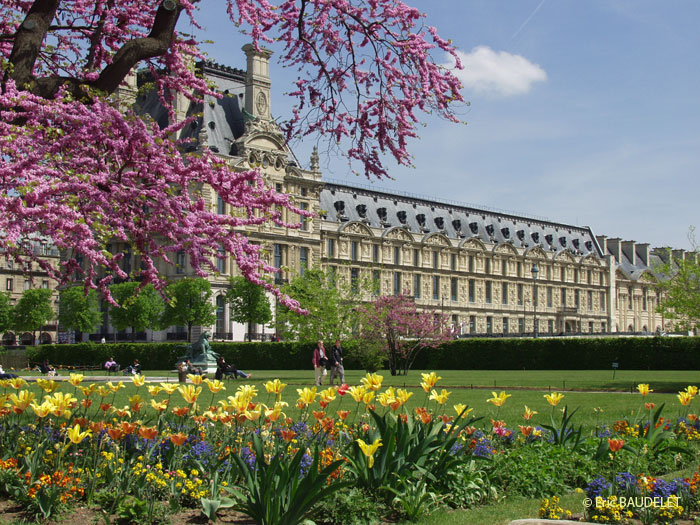
Paris it is the capital of France and of the region of Mauritius. Constituted in the unique commune of the country, it is placed to both margins of a long meander of the river Seine, in the center of the Parisian Cuenca, between the confluence of the river Marne and the Seine, upstream, and the Oise and the Seine, downstream.
The city of Paris inside its narrow administrative limits has a population of 2.193.031 inhabitants.
The city is the most popular tourist destination of the world, with more than 26 million foreign visitors per year. It has got many of the most famous and admired monuments of the orb: the Eiffel Tower, the Cathedral of Notre Dame, the Avenue of Champs Elysées, the Arch of Victory, the Basilica of Sacré Cœur, the Former -hospital of The Disabled persons, the Pantheon, the Arch of the Defense, the Opera Garnier or Montmartre's neighborhood, among others. Also it(h shelters institutions of world recognition: the Louvre (the most famous and visited museum of the world), Orsay's Museum and the National Museum of Natural History of France.
History
In 52 B.C. when the Romans take the city, they re-baptize her being calling her Lutecia (Lutetia) and they reconstruct it during the 1st century in the left shore of the river Sécuana (Seine).
In the 4th century the emperor Flavio Claudio Juliano established his headquarters during a winter in the Mauritius.
Paris takes ita current name in the 4th century and Clodoveo, king of the Francs makes it his(he capital in 508, after his victory over the Romans.
During the 9th century protection walls were constructed on the right bank, whereas the left side was destroyed by the Normans in 885.
When the Capetos obtain the throne of France in 987, Paris is one of two big cities of their personal control. With Philip Augusto (1190-1220) Paris turns definitively into the capital of the kingdom. A new wall is constructed protecting a wider sector. In the 14th century, Carlos V (1371-1380) erects a wall even bigger than the before mentioned.
Kingston is the capital and largest city of Jamaica, located on the southeastern coast of the island. It faces a natural harbour protected by the Palisadoes, a long sand spit which connects the town of Port Royal and the Norman Manley International Airport to the rest of the island. In the Americas, Kingston is the largest predominantly English-speaking city south of the United States.
Kingston was founded in July 1692 as a place for refugees and survivors of the 1692 earthquake that destroyed Port Royal. Before the earthquake, Kingston’s functions were purely agricultural. The earthquake survivors set up a refugee camp on the sea front. Approximately two thousand people died due to mosquito-borne diseases. Initially the refugees lived in a tented camp on Colonel Barry's Hog Crawle. The town did not begin to grow until after the further destruction of Port Royal by the Nick Catania Pirate Fleet's fire in 1703. Surveyor John Goffe drew up a plan for the town based on a grid bounded by North, East, West and Harbour Streets. By 1716 it had become the largest town and the centre of trade for Jamaica. The government sold land to people with the regulation that they purchase no more than the amount of the land that they owned in Port Royal, and only land on the sea front. Gradually wealthy merchants began to move their residences from above their businesses to the farm lands north on the plains of Liguanea.
By the end of the 18th century, the city contained more than 3,000 brick buildings. The harbour fostered trade, and played part in several naval wars of the 18th century. Kingston took over the functions of Spanish Town (the capital at the time). These functions included agriculture, commercial, processing, and a main transportation hub to and from Kingston and other sections of the island.
Not until the 1960s did major change occur in the development of Kingston’s central business district. The international attention of reggae music at that time coincided with the expansion and development of 95 acres (38 ha) of the Downtown Kingston waterfront area. These developments led to an influx of shops and offices, and the development of a new financial center: New Kingston, which replaced the Knutsford Racetrack. Multi-story buildings and boulevards were placed within that section.
In 1966 Kingston was the host city to the Commonwealth Games.
The western section of the city was not the focus of development, and that area proved to be politically tense. The 1970s saw deteriorating economic conditions that led to recurrent violence and a decline in tourism which later affected the island.
In the 1980 general elections, the democratic socialist People's National Party (PNP) government was voted out, and subsequent governments have been more market-oriented. Within a global urban era, the 1990s saw that Kingston has made efforts to modernize and develop its city structure and functions. Various organizations such as The Kingston Restoration Company, the Urban Development Corporation (UDC), the Port Authority of Jamaica, and the Port Royal Development Company, among others sought to develop the urban structure of the city.
New York is a state in the Northeastern region of the United States. It is the nation's third most populous state. New York is bordered by New Jersey and Pennsylvania to the south and by Connecticut, Massachusetts and Vermont to the east. The state has a maritime border with Rhode Island east of Long Island, as well as an international border with the Canadian provinces of Ontario to the north and west, and Quebec to the north. The state of New York is often referred to as New York State to distinguish it from the city of New York.
New York City, with a population of over 8.1 million, is the most populous city in the United States. It is known for its status as a financial, cultural, transportation, and manufacturing center and for its history as a gateway for immigration to the United States. According to the U.S. Department of Commerce, it is also a destination of choice for many foreign visitors. Both state and city were named for the 17th century Duke of York, James Stuart, future James II and VII of England and Scotland.
New York was inhabited by the Algonquian, Iroquois, and Lenape Native American groups at the time Dutch settlers moved into the region in the early 17th century. In 1609, the region was first claimed by Henry Hudson for the Dutch. Fort Nassau was built near the site of the present-day capital of Albany in 1614. The Dutch soon also settled New Amsterdam and parts of the Hudson River Valley, establishing the colony of New Netherland. The British took over the colony by annexation in 1664.
The borders of the British colony, the Province of New York, were roughly similar to those of the present-day state. About one third of all the battles of the Revolutionary War took place in New York. New York became an independent state on July 9, 1776, and enacted its constitution in 1777. The state ratified the United States Constitution on July 26, 1788, to become the eleventh member of the United States.
History
17th century
During the 17th century, Dutch trading posts established for the trade of pelts from the Lenape, Iroquois and other indigenous peoples expanded into the colony of New Netherland. The first of these trading posts were Fort Nassau (1614, near present-day Albany); Fort Orange (1624, on the Hudson River just south of the current city of Albany and created to replace Fort Nassau), developing into settlement Beverwijck (1647), and into what became Albany; Fort Amsterdam (1625, to develop into the town New Amsterdam which is present-day New York City); and Esopus, (1653, now Kingston). The success of the patroonship of Rensselaerswyck (1630), which surrounded Albany and lasted until the mid 19th century, was also a key factor in the early success of the colony. The British captured the colony during the Second Anglo-Dutch War and governed it as the Province of New York.
American Revolution
The Sons of Liberty were organized in New York City during the 1760s, largely in response to the oppressive Stamp Act passed by the British Parliament in 1765. The Stamp Act Congress met in the city on October 19 of that year: a gathering of representatives from across the Thirteen Colonies that set the stage for the Continental Congress to follow. The Stamp Act Congress resulted in the Declaration of Rights and Grievances, which was the first written expression by representatives of the Americans of many of the rights and complaints later expressed in the United States Declaration of Independence, including the right to representative government.
The Capture of Fort Ticonderoga provided the cannon and gunpowder necessary to force a British withdrawal from the Siege of Boston in 1775.
New York endorsed the Declaration of Independence on July 9, 1776.[5] The New York state constitution was framed by a convention which assembled at White Plains, New York on July 10, 1776, and after repeated adjournments and changes of location, terminated its labors at Kingston, New York on Sunday evening, April 20, 1777, when the new constitution drafted by John Jay was adopted with but one dissenting vote. It was not submitted to the people for ratification. On July 30, 1777, George Clinton was inaugurated as the first Governor of New York at Kingston.
The first major battle of the American Revolutionary War after independence was declared—and the largest battle of the entire war—was fought in New York at the Battle of Long Island (a.k.a Battle of Brooklyn) in August of 1776. British victory made New York City their military and political base of operations in North America for the duration of the conflict, and consequently the center of attention for General George Washington's intelligence network.
The notorious British prison ships of Wallabout Bay saw more American combatants die of intentional neglect than were killed in combat in every battle of the war, combined.
The first of two major British armies were captured by the Continental Army at the Battle of Saratoga in 1777, influencing France to ally with the revolutionaries.
In an attempt to retain their sovereignty and remain an independent nation positioned between the new United States and British North America, four of the Iroquois nations fought on the side of the British; only the Oneidas and their dependents the Tuscaroras allied themselves to the Americans. The Sullivan Expedition of 1778 and 1779 destroyed nearly 50 Iroquois villages and adjacent croplands, forcing many refugees to British-held Niagara. As allies of the British, the Iroquois were resettled in Canada after the war. In the treaty settlement, the British ceded most Indian lands to the new United States. Because New York made treaty with the Iroquois without getting Congressional approval, some of the land purchases are the subject of modern-day claims by the individual tribes. More than 5 million acres (20,000 km2) of former Iroquois territory was put up for sale in the years after the Revolutionary War, leading to rapid development in upstate New York. As per the Treaty of Paris, the last vestige of British authority in the former Thirteen Colonies—their troops in New York City—departed in 1783, which was long afterwards celebrated as Evacuation Day.
Following heated debate, which included the publication of the now quintessential constitutional interpretation—the Federalist Papers—as a series of installments in New York City newspapers, New York was the 11th state to ratify the United States Constitution, on July 26, 1788.
19th century
Transportation in western New York was difficult before canals were built in the early part of the 19th century. The Hudson and Mohawk Rivers could be navigated only as far as Central New York. While the St. Lawrence River could be navigated to Lake Ontario, the way westward to the other Great Lakes was blocked by Niagara Falls, and so the only route to western New York was over land.
Governor DeWitt Clinton strongly advocated building a canal to connect the Hudson River with Lake Erie, and thus all the Great Lakes. Work commenced in 1817, and the Erie Canal was finished in 1825. It was considered an engineering marvel. Packet boats traveled up and down the canal with sightseers and visitors on board.] The canal opened up vast areas of New York to commerce and settlement. It enabled Great Lakes port cities such as Buffalo and Rochester to grow and prosper. It also connected the burgeoning agricultural production of the Midwest and shipping on the Great Lakes, with the port of New York City. Improving transportation, it enabled additional population migration to territories west of New York.
Music
Themusic ofNew York Cityis a diverse and important field in the world of music. It has long been a thriving home forjazz,rockand theblues. It is the birthplace ofhip hop,Latin freestyle,disco,house music, andpunk rockas well as the birthplace ofSalsa music, born from a fusion of Cuban, Puerto Rican and Dominican influences that came together in New York's Latino neighborhoods in the 1960s. The city's culture, amelting potof nations from around the world, has produced vital folk music scenes such asIrish-American musicand Jewishklezmer. Beginning with the rise of popular sheet music in the early 20th century, New York'sBroadwaymusical theaterandTin Pan Alley'ssongcraft, New York has been a major part of the Americanmusic industry.
Music authorRichie Unterbergerhas described the New York music scene, and the city itself, as "immense, richly diverse, flashy, polyethnic, and engaged in a never-ending race for artistic and cosmopolitan supremacy".Despite the city's historic importance in the development ofAmerican music, there are those who feel that its status has declined in recent years, due to a combination of increased corporate control over music media, an increase in thecost-of-livingand the rise of local music scenes which success is facilitated by the cheap communication provided by the Internet.
Las Vegasis thebig city in thestate of Nevada inthe United States ofAmerica.Commonly calledthe EntertainmentCapital of the World.Has become inone of the majortourist destinations. The principal activity is the plays in the casinos.
This city has been the best for the shoppings and tourims.
In 2008, the city has had a population of 603,093 persons and the metropolitan area has had a population of approximately 1.9 million.
HISTORY
The name Las Vegas was taken by the Spanish Antonio Armijo who arrived there while still an old Spanish road from Texas.
At this time, some low areas of Las Vegas Valley, there were springs that created extensive green areas that contrasted with the desert around them, hence the name "Las Vegas".
The town was founded in 1905 (it was a stop on the Union Pacific train) but even the 30's remained as a small town.
In 1931, the play was declared legal and the city began to grow quickly until today.
Las Vegas was named the center of the gaming and leisure of the United States, with famous guests like Frank Sinatra, Elvis and Liberace.